Mar. 3, 2026. One paper (on multi-agent constraint learning) accepted to the IEEE Robotics and Automation Letters (RA-L).
Feb. 21, 2026. One paper (on robust fine-tuning for improving OOD generalization of VLA models) accepted to CVPR 2026.
Jan. 31, 2026. Five papers (on deformable object simulation via convex optimization, robust feedback motion planning for multi-agent systems, probabilistically-safe locomotion, formal verification for generative motion planners, and navigation via a hybrid mixture of learning-based and model-based experts) accepted to ICRA 2026.
Jan. 26, 2026. One paper (on learning constraints from stochastic demonstrations) accepted to the IEEE Control Systems Letters (L-CSS), with presentation at ACC 2026.
Jan. 22, 2026. Three papers (on Koopman-based reachability (oral presentation), stastically-assured robust MPC via conformal prediction, and active constraint learning) accepted to L4DC 2026.
Nov. 11, 2025. One paper (on fast LiDAR perception from streaming data) accepted to WACV 2026.

News: We are actively recruiting PhD students to join the lab in Fall 2025 (deadlines ranging between December 2, 2024 to December 16, 2024), and we are also looking for driven UG and MS Georgia Tech students to contribute to our research. See the flyer and the openings page for more details.


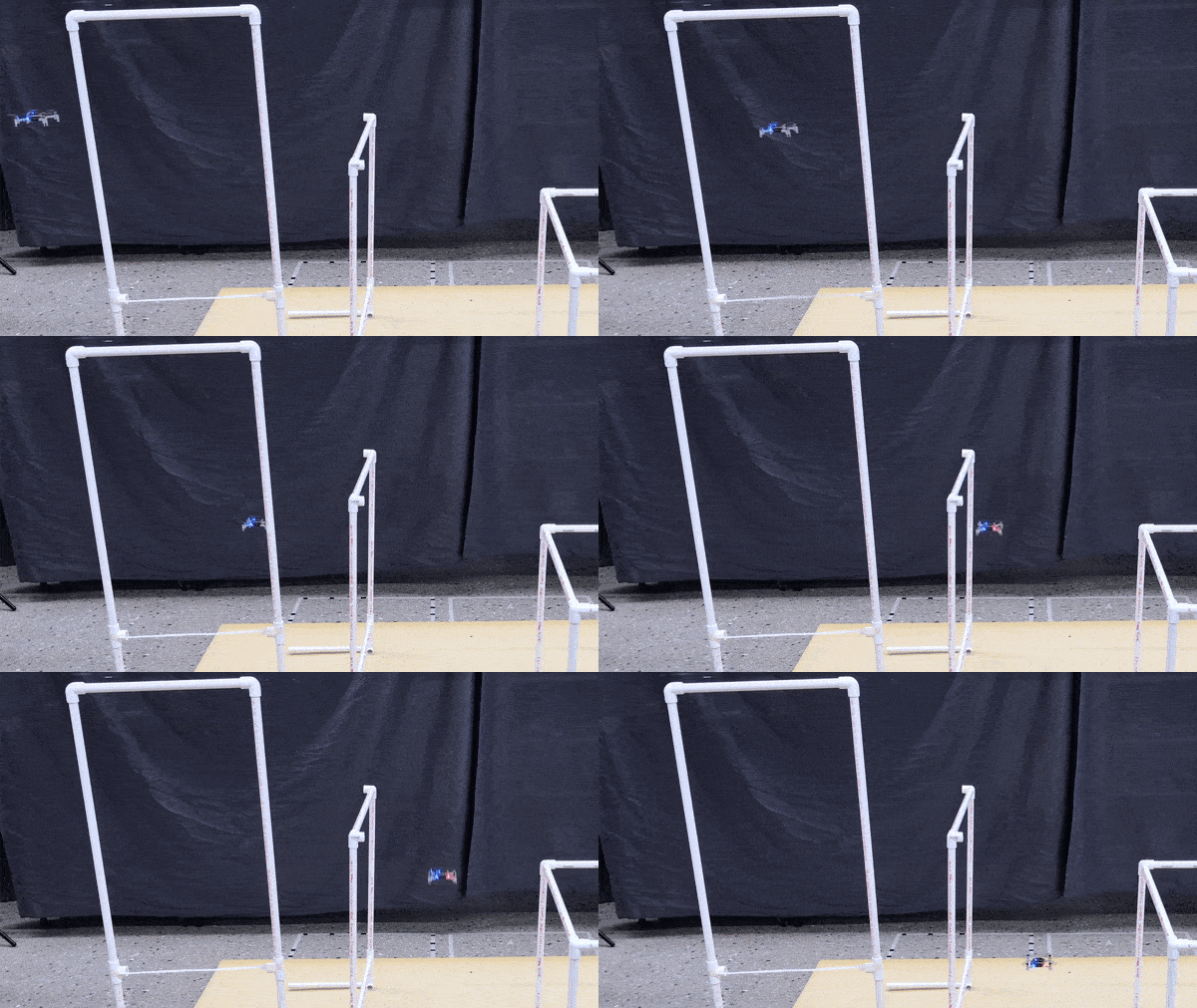
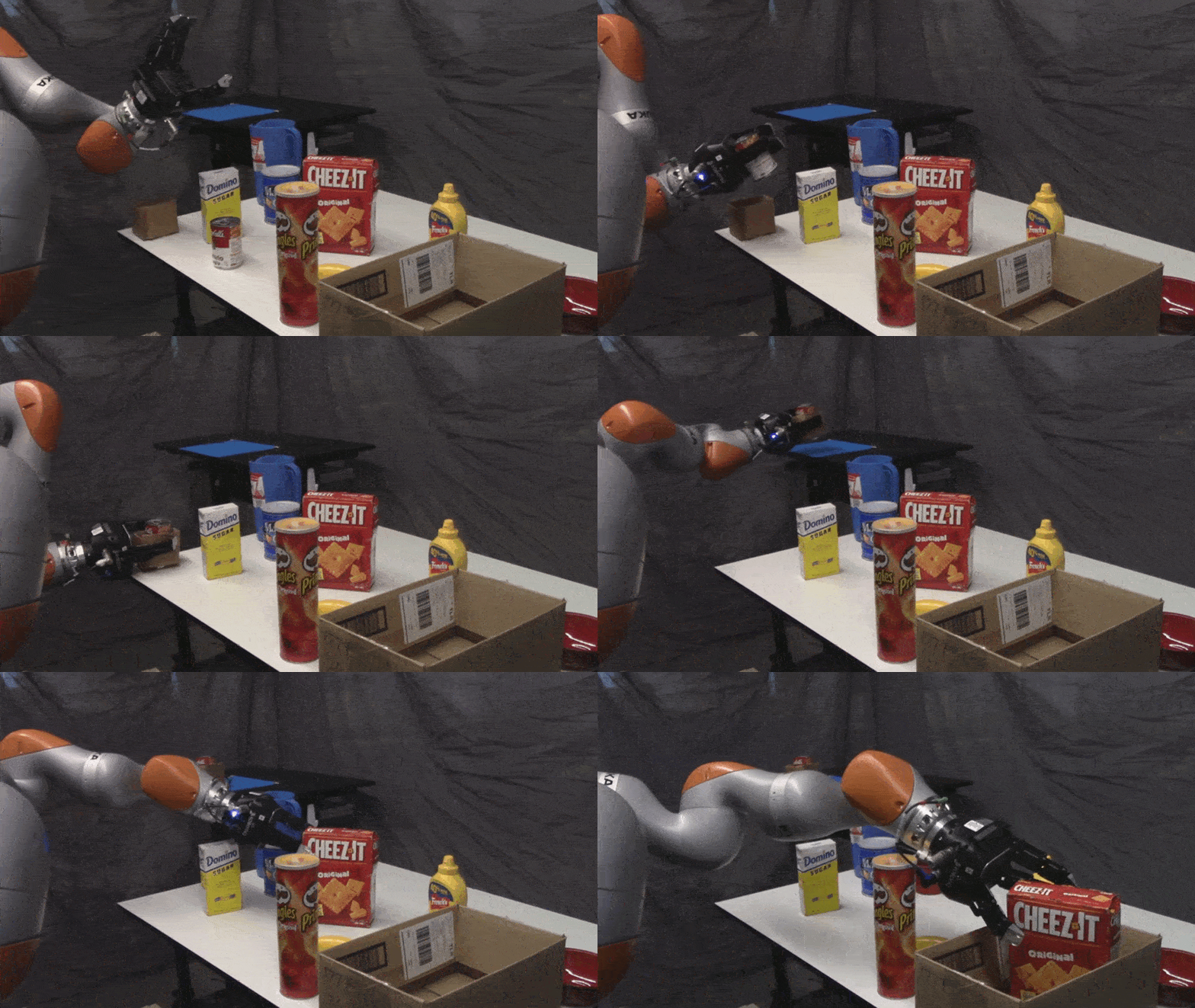
Welcome! The Trustworthy Robotics Lab at Georgia Tech, directed by Glen Chou, designs principled algorithms that can enable general-purpose robots and autonomous systems to operate capably, safely, and securely with humans, while remaining resilient to real-world failures and uncertainty.

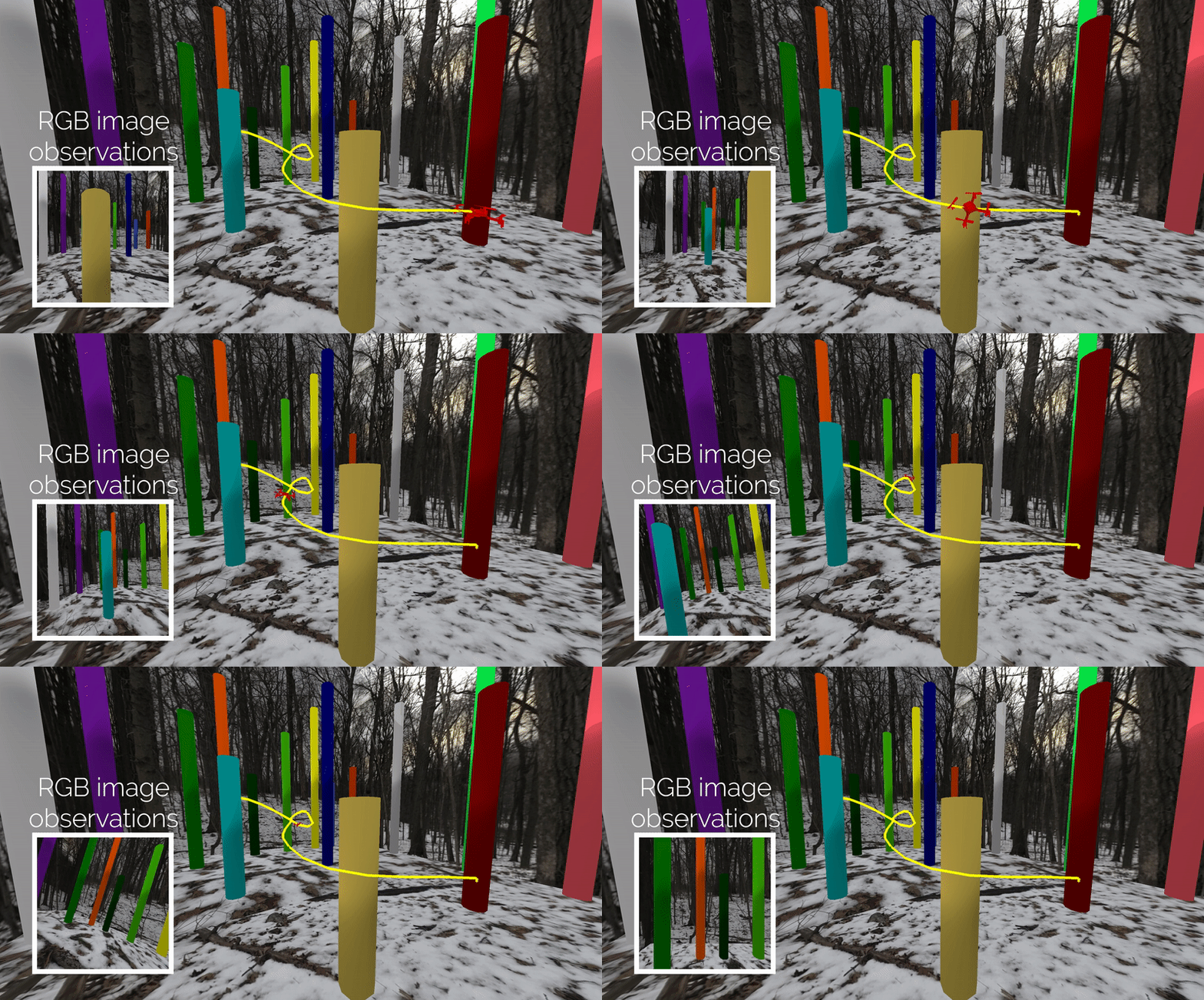
To achieve this, we leverage control and machine learning, while connecting to optimization, perception, formal methods, planning, human-robot interaction, and statistics. We're interested in broad applications of autonomy, including robotic manipulation, vision-based navigation, aerospace, and large-scale cyber-physical systems more generally. Check out the links below or this page for an overview of our work.

Formally-Verified Model-Based
Control Synthesis

Trustworthy Learning-Based
Planning and Control

Safe and Robust
Human-Robot Interaction